

For decades, luxury fragrance was presented as a finished story. Major perfume houses shaped the identity, selected the ingredients, designed the bottle, and invited consumers to step into a carefully constructed world. The customer’s role was primarily to choose which story felt most personal.
Canada’s independent fragrance scene is changing that relationship. Across urban studios, intimate ateliers, and destination-based scent experiences, perfume lovers are becoming active participants in the creative process. Instead of simply purchasing a fragrance, they are learning how scent is built, experimenting with raw materials, and developing a formula that reflects their own memories, moods, and sense of style.
This shift transforms perfume from a product into an experience—and from a finished luxury object into a form of personal expression.
From Consumer to Co-Creator
The modern perfume workshop places the participant at the centre of the creative process. Guests are not simply handed a selection of pre-made oils and asked to combine them casually. Under the guidance of a perfumer or scent designer, they are introduced to the architecture of a fragrance and begin to understand how individual materials work together.
The process typically begins with the fragrance pyramid: top notes, heart notes, and base notes. Top notes create the first impression of a perfume and often include bright citrus, fresh herbs, airy greens, and other volatile materials. Heart notes provide the central character of the composition, with possibilities ranging from florals and tea accords to transparent fruits, aromatic botanicals, and soft spices. Base notes offer depth and longevity through woods, ambers, musks, resins, and other grounding materials.
Participants gradually learn that a beautiful perfume is not simply a collection of ingredients they enjoy individually. It is a carefully balanced relationship between contrast, texture, evaporation, diffusion, and lasting power. A sparkling citrus opening may need a soft floral heart. A delicate tea accord may require woods or musk for structure. A rich amber may need fresh or transparent notes to prevent the composition from becoming too dense.
This educational element is what separates a guided perfume workshop from a casual do-it-yourself activity. The guest is encouraged to trust their instincts, but they are also given a technical framework for making informed creative decisions.
The Technical Ritual of Precision
One of the most compelling aspects of a contemporary perfume workshop is its balance between artistic freedom and laboratory precision. Guests may arrive with a general idea—something fresh, sensual, woody, clean, nostalgic, or mysterious—but the creative process quickly becomes more exact.
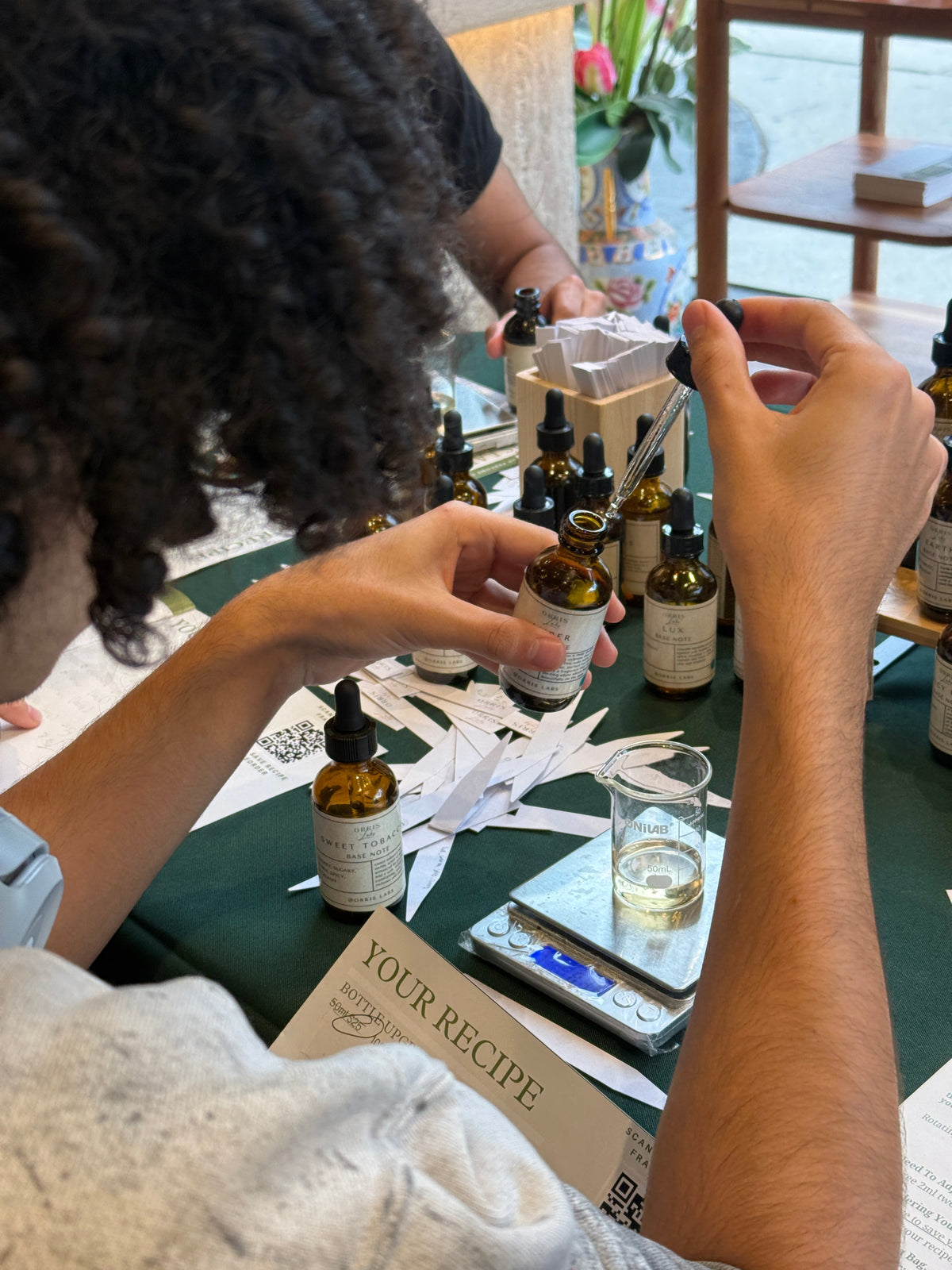
Micro-pipettes, precision scales, graduated glass beakers, scent strips, and small formulation bottles help create the atmosphere of a working laboratory. These tools add a sense of authenticity and purpose. Participants are not merely blending fragrances for entertainment; they are learning how a professional formula is assembled, adjusted, tested, and refined.
Small changes can have a major impact. Adding a single material may brighten the opening, soften the drydown, intensify the floral character, or shift the composition from airy to warm. The process encourages patience because perfume evolves over time. A blend that smells sharp and vibrant on a blotter may become softer after resting, while a composition that initially feels subtle may develop greater presence on skin.
This precision gives the workshop an artisanal weight. Guests leave with a stronger appreciation for the skill involved in creating fragrance and a deeper understanding of why fine perfume is often described as both an art and a science.
Studios such as Orris Labs position their workshops around this relationship between scientific precision and artistic expression, inviting participants to transform raw materials into a personal fragrance under expert guidance.


